Winter is approaching, and with it the question that comes up every year in international families: what if we gave our child a week on the snow, in Switzerland, supervised? The idea is a lovely one — skiing in the fresh air, new friends from all over the world, sometimes a language that improves almost unnoticed. But behind the "winter camp" label hide very varied realities, and not all of them suit the same child.
Rest assured: this choice is made very well once you know what to look for. We will see what a winter camp really covers, what matters when choosing, how to tell a ski camp from a language camp (and those that do both), then the precise questions to ask before booking — with, at the end, the five practical tips from My Student Hub.
What a "winter camp" really covers
Three broad families, which sometimes overlap.
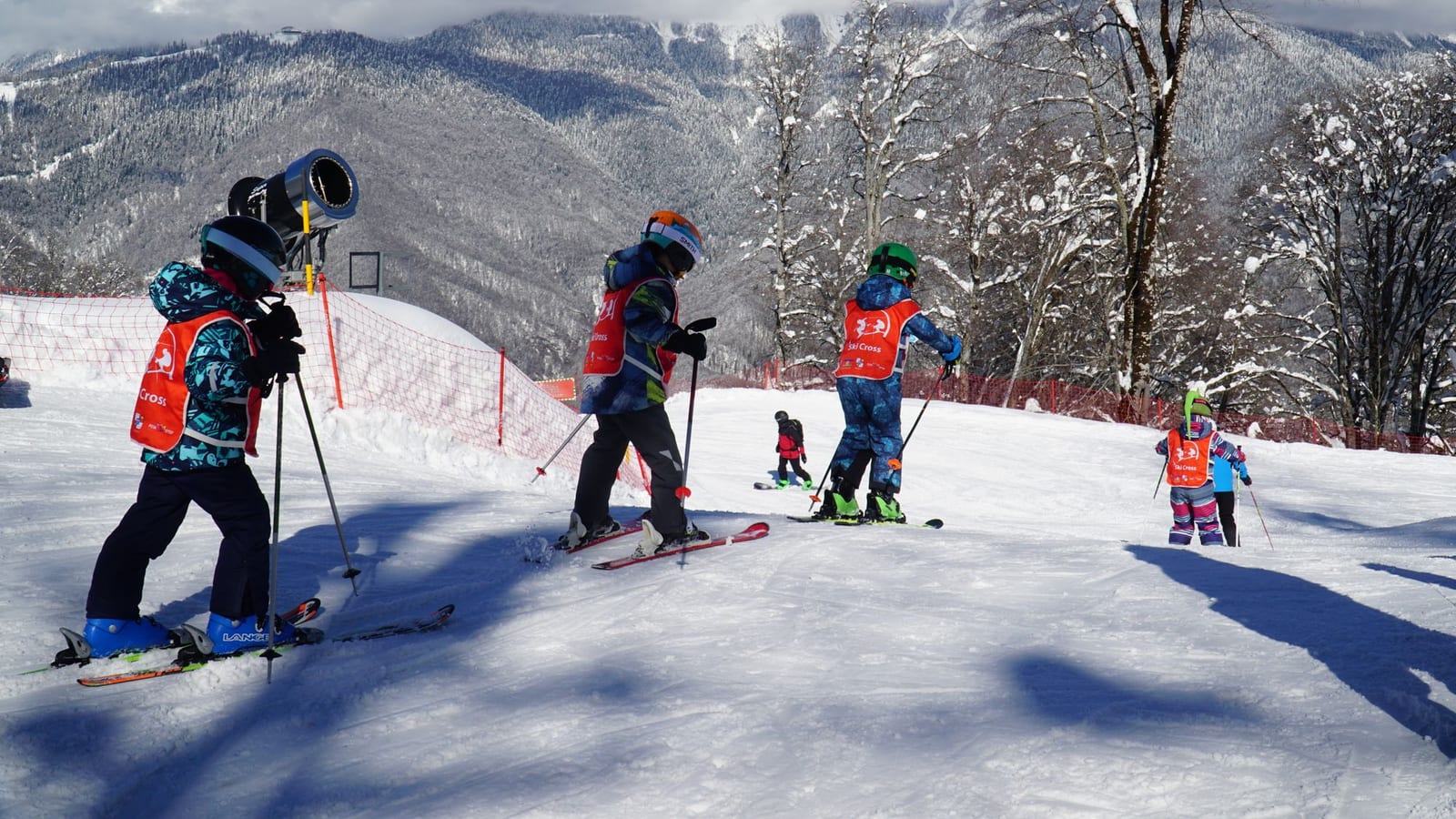
The ski / snowboard camp. The heart of the day is the snow: lessons led by instructors, progress by level, from beginner to advanced. You find them as day camps as well as residential ones, in the major Swiss resorts. Providers such as Les Elfes (Verbier), Village Camps, Camp Suisse, Lovell Camps or FILOLO offer this kind of stay over the winter season.
The language camp in winter. Here, the primary aim is linguistic — French, English or German — in an international setting, with skiing or snow activities as a complement rather than the centre. Some private schools open their winter programmes in this spirit, such as Institut Monte Rosa or Surval Montreux.
The multi-activity camp. It combines snow sport, language and activities (skating, snowshoeing, cultural outings), often in a complete residential formula. It is the most common "immersion" format for families who want both the snow and the international mix; the Collège du Léman, for example, offers a camp in summer as well as in winter.
None of these families is "better": it all depends on what you are looking for, for your child, that particular winter.
What really matters when choosing
The programme is appealing in a brochure; it is these points that make the difference on the ground.
Supervision and safeguarding. This is criterion number one, especially in residential camps. Who watches over the children outside ski hours — in the evening, at night, during free time? What is the supervisor-to-children ratio? What procedures protect minors? A clear, precise answer is the best sign of seriousness.
Age and maturity. Beyond the advertised minimum age, ask for the actual age range of your child's group. An 8-year-old and a 15-year-old teenager do not experience the same camp, even under the same brand.
Ski level and how groups are formed. All levels are generally accepted, but the quality lies in how the groups are formed (by level, not only by age), in the instructor-to-skiers ratio and in the time actually spent on the slopes, supervised.
Language. If language progress matters, look at the actual number of lesson hours, the format (small group?) and above all the mix of nationalities: a camp where everyone already speaks the same language at break makes slower progress.
Accommodation and logistics. Residential or day? Who provides the ski equipment, and at what cost? How are the transfers from the airport handled? For a family based far away, these details weigh as much as the programme.
Ski camp, language camp, or both?
The right question is not "which is best?" but "what is our priority this winter?".
If you are aiming above all at progress on the snow, go for a camp where skiing structures the day, with genuine sporting supervision. If your priority is language, a language camp with snow activities as a complement will be more effective — provided you check the lesson hours and the international mix. And if you want both, multi-activity camps exist precisely for that; simply ask how the day is divided, to avoid the formula where a bit of everything is done without going deep into anything.
A useful marker: language is worked on mostly outside lessons — at lunch, in the bedroom, on the chairlift. A genuinely international camp brings far more progress than an isolated hour of lessons in a monolingual group.
The questions to ask the provider
To take into your first exchange. Closed questions, which a serious camp answers plainly.
- What is the actual age range of my child's group, and the size?
- What is the supervisor-to-children ratio, by day as by night? Who watches over them in the evening in a residential camp?
- How do you form the ski groups (by level?), and how many supervised hours per day?
- If language matters: how many lesson hours, in what format, and what is the mix of nationalities?
- Is the ski equipment provided? Are the transfers from the airport organised?
- What are your safeguarding procedures and your protocol in case of an injury on the slopes?
- What are the exact dates of the relevant session and your cancellation conditions?
MSH Advisory's five practical tips
- Book early. The winter sessions (December–March) fill up quickly, and the logistics (equipment, transfers) are arranged in advance.
- Have the supervision spelled out, not the programme. A brochure sells activities; ask for the ratio, the safeguarding and who is reachable outside ski hours. It is the most telling answer.
- Choose according to your priority. Ski, language or both: name your objective before comparing, otherwise every brochure looks alike.
- Check the real level of mix. For language as for openness, ask for the breakdown of nationalities in your child's group.
- Confirm the dates at the source. Sessions change every year: check the calendar and the deadlines directly with the provider before committing.
And to see the real range?
We keep a selection of verified Swiss camps — summer, winter and language — that you can explore and filter by season, region, discipline and language in our camps directory. Each listing links to the provider's official dates page. And if it is summer that interests you, see how to choose a summer camp in Switzerland. To place winter camps within our wider support, see also our camps and immersions within the private advisory.
Frequently asked questions
At what age can a child go to a winter camp in Switzerland?
It depends on the provider: some welcome children from 6-7 as day campers, others from 8-10 as residential campers, and most run up to the teenage years. The right marker is not age alone, but the child's maturity to live away from home and their ease in a group. Check the minimum age and the actual age range of your child's group with each camp.
Does a child already need to know how to ski for a ski camp?
No. Most Swiss winter camps welcome all levels, from beginner to advanced, with lessons led by qualified instructors and groups organised by level. What matters is to check how the camp forms its groups, the instructor-to-children ratio and the amount of supervised skiing in the day.
Ski camp or language camp in winter: do you have to choose?
Not necessarily. Many winter camps combine the two: snow sport in the morning, language lessons in the afternoon (or the other way round), in an international setting. If your priority is language progress, check the actual number of lesson hours and the mix of nationalities; if it is skiing, look at time on the slopes and the sporting supervision.
Are Swiss winter camps residential or day camps?
Both exist. Residential camps (boarding) take the child in day and night, with supervision in the evening and at weekends — often chosen by families based far from the resort. Day camps suit families who are nearby. For a residential camp, ask who supervises outside activity hours and how information reaches parents.
When should you book a winter camp?
Early. Places on the winter sessions (December to March) go quickly, and ski equipment as well as transfers are arranged in advance. As soon as you have spotted a camp, check the dates of the relevant season directly with the provider and confirm the registration deadlines.