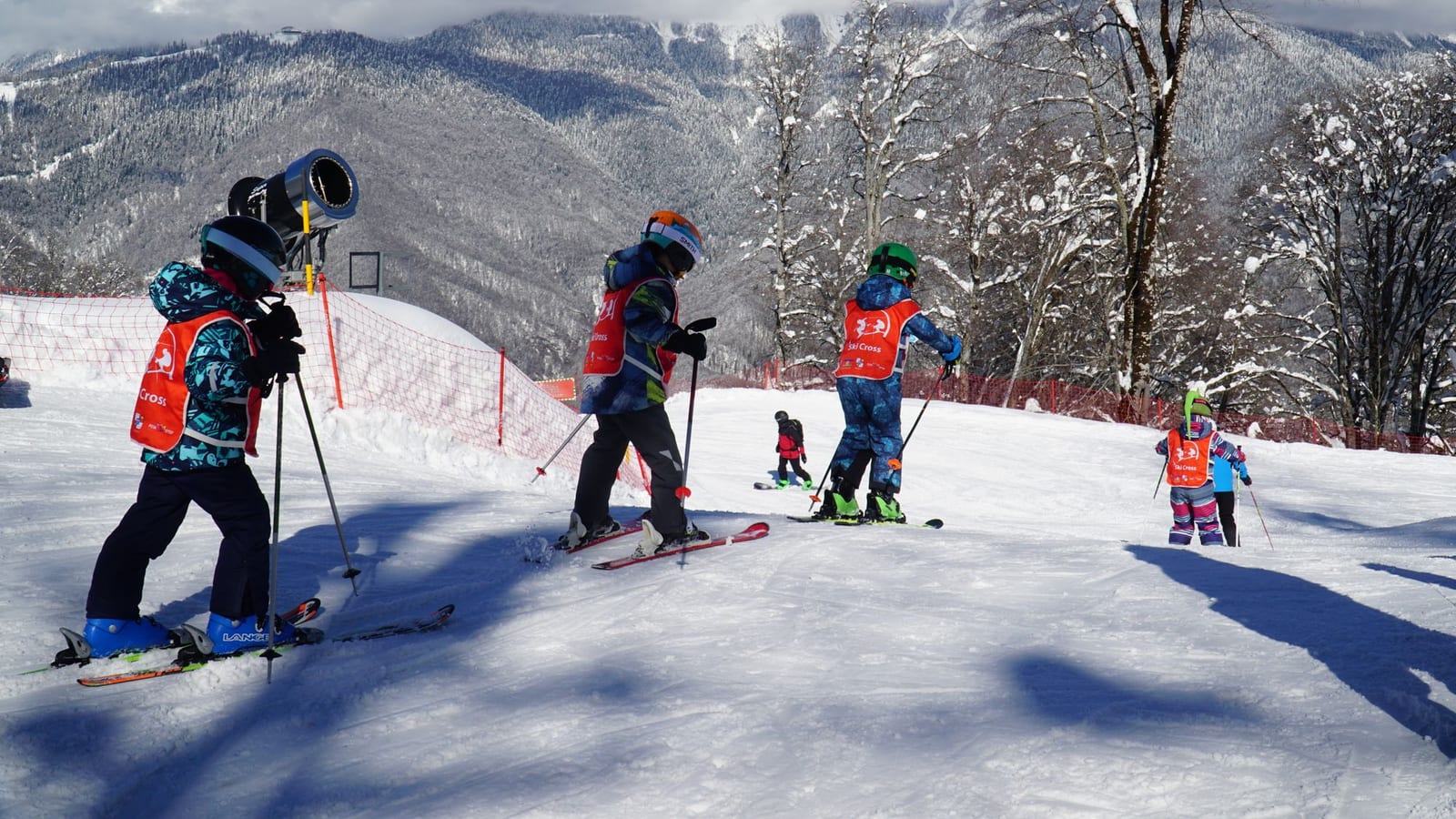
Every spring, the same conversation comes up at the table: what to do with our child's summer? For many international families, the answer runs through a camp in Switzerland — a few supervised weeks, between lake and mountain, among children from all over the world. The idea is excellent. You still have to choose the right camp, because behind one and the same summer season, the educational projects are very different.
Rest assured: this choice breaks down neatly. We will look at the broad families of summer camps, what really matters when choosing, the precise questions to ask before booking, and then the five practical tips from My Student Hub.
The broad families of summer camps
Four orientations, which often combine.
The language camp. The primary aim is progress in French, English or German, in an international setting. It is the format most chosen by families who want to move a language forward over the summer. Organisers such as Alpadia (Kaplan), Frilingue or Village Camps make it their core business, and several private schools open language programmes in summer.
The academic camp. It aims to reinforce certain subjects, discover a discipline or prepare for a demanding term. Major Swiss schools offer summer programmes with a strong educational dimension — for example TASIS, the Rosenberg, Brillantmont, the Lyceum Alpinum Zuoz or LAS (Leysin).
The sport-and-adventure camp. Hiking, water sports on the lake, climbing, tennis, and all the outdoor activities the Swiss mountains offer in summer. Camps such as Le Rosey — Summer Camps, Aiglon Summer School & Adventure Camp, Beau Soleil or Les Elfes put the emphasis on experience and the outdoors.
The multi-activity camp. It combines language, sport, activities and outings, in a full immersion. It is the "international summer camp" format par excellence; the Collège du Léman, the Collège Champittet or ENSR, for example, offer this kind of stay.
No family of camps is superior: it all depends on your aim for that particular summer.
What really matters when choosing
Supervision and safeguarding. As with boarding, this is the first criterion. Who watches over the children outside the activities — in the evening, at night? What supervisor-to-child ratio? What procedures protect minors? The clarity of the answer is your best indicator.
The group's real age. Beyond the minimum age, ask for the actual age range of your child's group. The gap between an 8-year-old and a 16-year-old changes everything, even under the same brand.
The mix of nationalities. This is the decisive point for a language camp — and a real asset of openness for all camps. A genuinely international group makes far more progress than a camp where everyone falls back on their mother tongue at break.
Length and rhythm. One week or several? Weekly entry or a fixed session? For a first experience away from home, one to two weeks is often enough; you extend afterwards if the child takes to it.
The aim, clearly named. Language, academic, sport or discovery: the more precise your priority, the simpler the comparison becomes. A camp that promises "a bit of everything" sometimes dilutes every dimension.
The questions to ask the organiser
To take into your first exchange.
- What is the real age range of my child's group, and the number of children?
- What is the supervisor-to-child ratio, by day as at night? Who watches over them in the evening in a residential camp?
- What is the mix of nationalities in my child's group?
- If language matters: how many lesson hours really, and in what format?
- What are your safeguarding procedures and your protocol in case of a medical problem?
- Is the camp residential or day? Are transfers organised?
- What are the session dates and your cancellation or postponement conditions?
The five practical tips from MSH Advisory
- Name your aim before comparing. Language, academic, sport or immersion: without a clear priority, all the brochures look alike.
- Judge the supervision, not the setting. A beautiful campus says nothing about safeguarding. Ask for the ratio, the procedures and who is reachable outside the activities.
- Check the international mix, especially for a language camp: that is what makes the difference, not the number of lesson hours on its own.
- Calibrate the length to the child. For a first time, one to two weeks; you extend afterwards as the wish grows.
- Book early and confirm the dates at the source. The best weeks go fast; check the calendar directly with the organiser.
And to see the real range?
We keep a selection of verified Swiss camps — summer, winter and language — to explore and filter by discipline, region and language in our camps directory. Each entry links to the organiser's official dates page. And if it is winter that interests you, see how to choose a winter camp in Switzerland. To place camps within our overall support, see our camps and immersions.
Frequently asked questions
Which type of summer camp should I choose in Switzerland?
It depends on your aim for your child this summer: making progress in a language (language camp), reinforcing certain subjects or preparing for a demanding term (academic camp), practising a sport or discovering the mountains (sport-and-adventure camp), or simply living a full international immersion (multi-activity camp). Name the priority first; the rest of the choice follows from it.
From what age, and for how long?
Swiss summer camps generally welcome children from around 7-8 years old up to adolescence, residential or day, for stays ranging from one to several weeks (often with weekly entry). The right marker is not age alone but the child's maturity to live away from home; for a first time, one to two weeks is often enough.
Does a language camp really make a difference?
Yes, on two conditions: a real volume of supervised lessons and a genuine mix of nationalities. Language is worked on as much outside lessons — at meals, in the room, during activities — as in class. A camp where all the children already share the same language at break makes slower progress; check the mix of nationalities in your child's group.
Are summer camps residential or day camps?
Both. Residential camps (boarding) take the child day and night, with supervision in the evening and at weekends — suited to families based far away or who want full immersion. Day camps suit families nearby. For a residential camp, ask who supervises outside the activities and how information reaches the parents.
When should you book a summer camp?
Several months in advance for the most sought-after camps: the best weeks and the residential places go early. As soon as a camp is on your list, check the session dates directly with the organiser and confirm the registration deadlines.